What the lesson covers
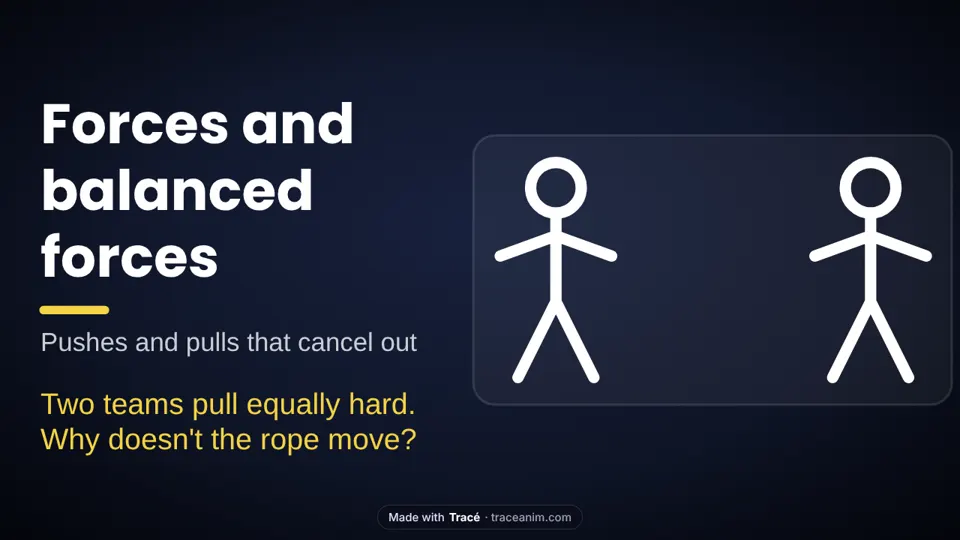
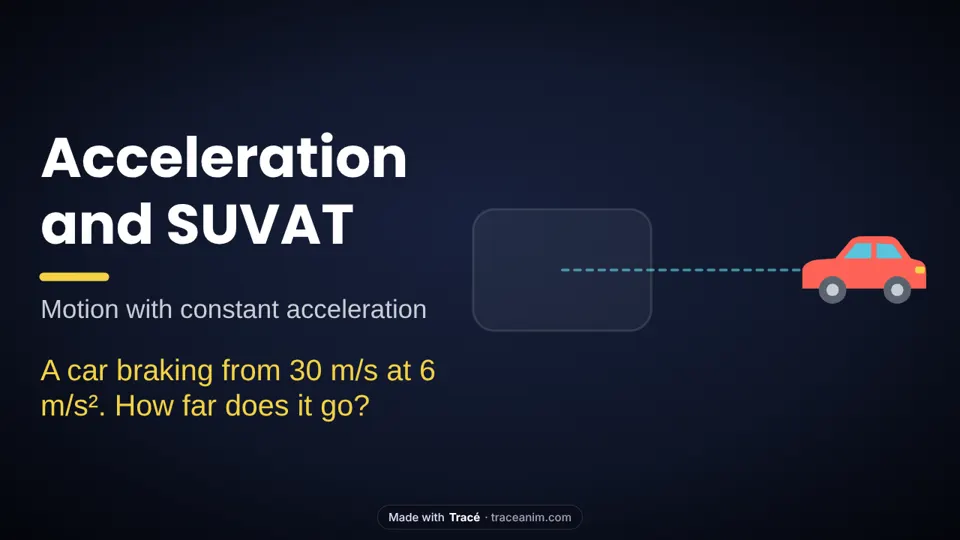
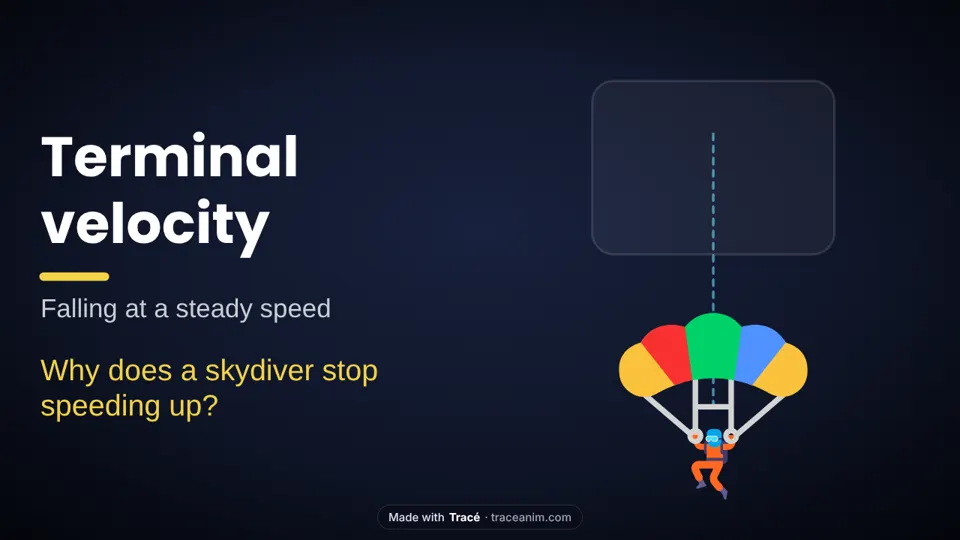
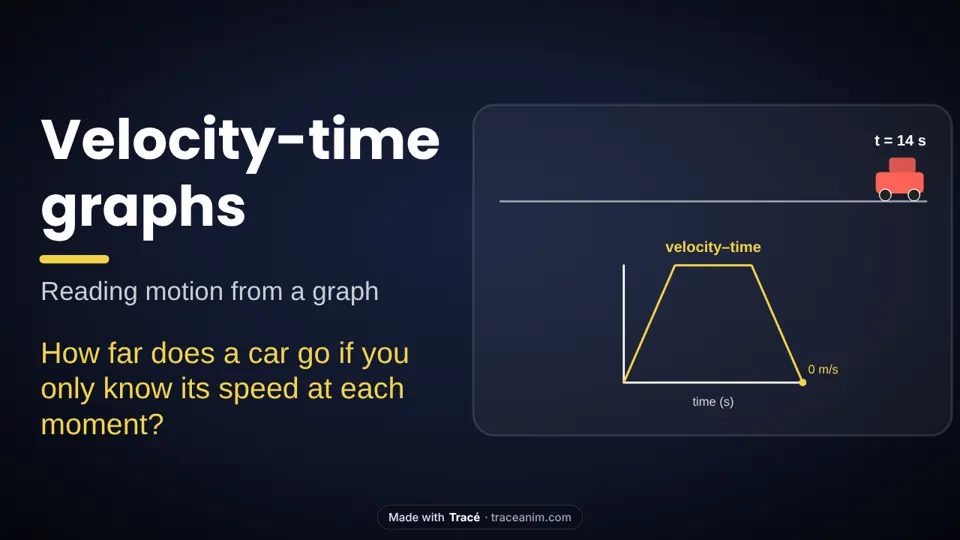
A spacecraft coasting without engines and passengers lurching on a braking bus show inertia. Students use balanced forces to find the driving force of a car at steady speed.
The slides, one by one
1 Newton's first law
Objects keep doing what they are doing
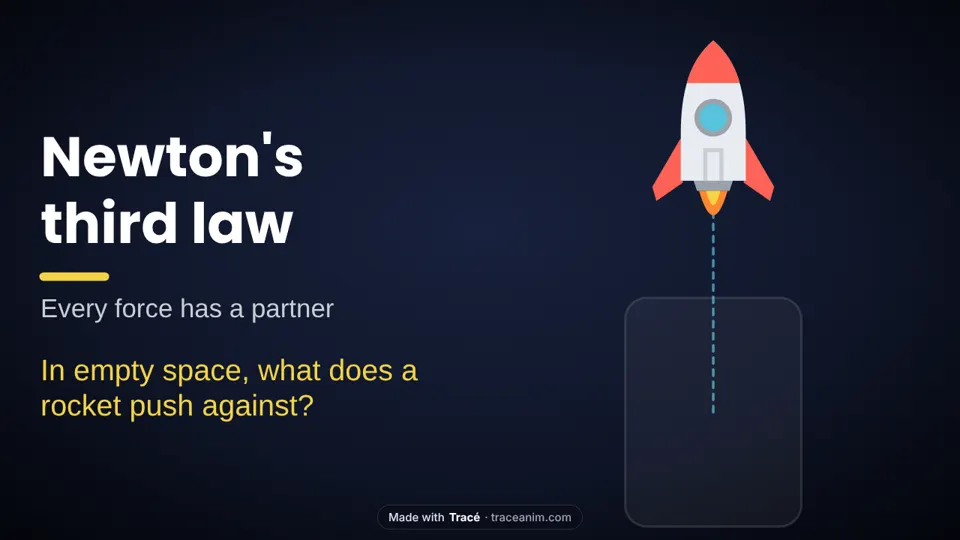
Why does a space probe keep moving with its engines off?
2 Your body keeps moving when the bus stops
The bus and passenger move together
The bus brakes suddenly
The passenger keeps going forward
3 No resultant force, no change in motion
Resultant force zero
- At rest: stays at rest
- Moving: constant velocity
Resultant force not zero
- Speeds up or slows down
- Or changes direction
Inertia: objects resist changes to their motion
4 The driving force at a steady speed
A car moves at a steady 25 m/s against 800 N of drag and friction. Find the driving force. If it rises to 1400 N, find the acceleration of the 1200 kg car.
→ Steady speed means balanced forces
The driving force is 800 N; at 1400 N the car accelerates at 0.5 m/s²
5 Quick check
A puck slides on frictionless ice. It will…
- slow down and stop
- keep a constant velocity
- speed up
- curve to one side
Show the answer
keep a constant velocity
No resultant force acts, so its velocity does not change.
6 What to remember
No resultant force: velocity stays the same
Balanced forces can mean moving
Inertia: resistance to change
More mass, more inertia
Challenge: Why do you need a seatbelt in a crash?
Every slide is built click by click: text, formulas and pictures come in one step at a time, so the class follows the reasoning instead of reading ahead. Graphs with sliders can be dragged live while you present.
Make your own version with AIChange the level, the numbers or the language: type the topic and get a new deck that moves in about 30 seconds. Free, no account needed.
Questions teachers ask
What is Newton's first law?
An object stays at rest, or keeps moving at constant velocity, unless a resultant force acts on it.
Are these slides really free?
Yes. Watch them on this page or present them full screen with no account. Making your own copy to edit is free too.
Can I change the slides before my lesson?
Yes. Press "Make my own copy" and the deck becomes one of your projects in the Tracé editor, where you can change the text, the numbers, the colours or the order of the clicks.
Do they work on a classroom projector or an interactive whiteboard?
Yes. They run in the browser on any laptop, so anything that shows your screen works. Press the right arrow or click to go to the next step.