
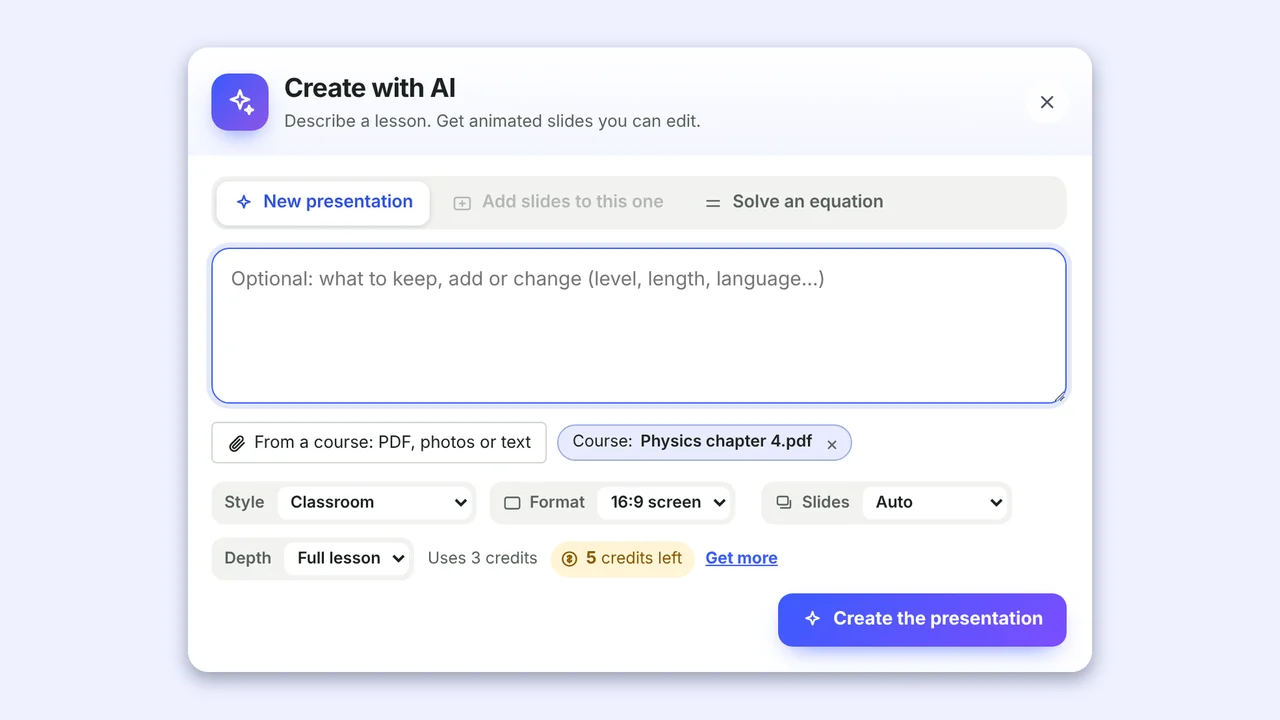
Your PDF becomes a talk outline
Choose the Lecture or Expert style and how many slides you have time for. Tracé keeps your formulas and numbers and writes speaker notes on request.
For researchers
The paper is written; the talk is still empty. Drop in the PDF and Tracé drafts the slides: the problem, the method with its equations, the results and the take-home message. Then animate what matters, a derivation that builds term by term or a model that responds to a slider, and present from the browser or export to PowerPoint.
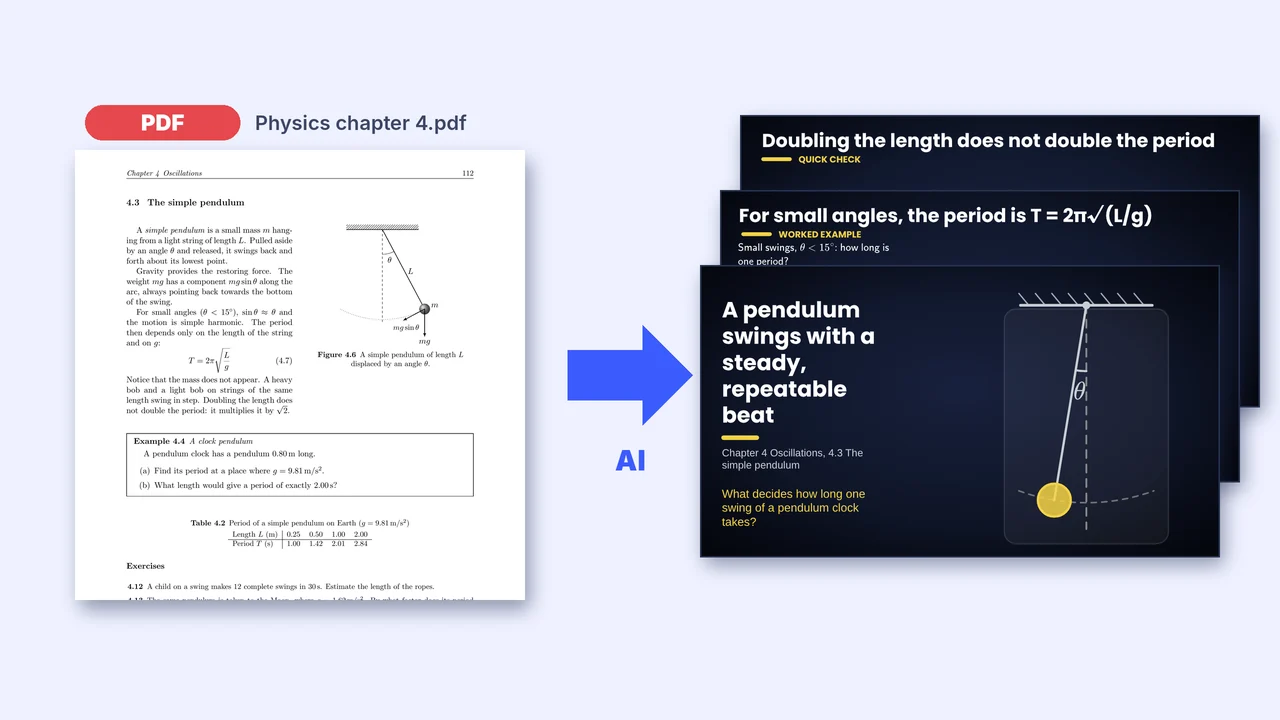
Choose the Lecture or Expert style and how many slides you have time for. Tracé keeps your formulas and numbers and writes speaker notes on request.
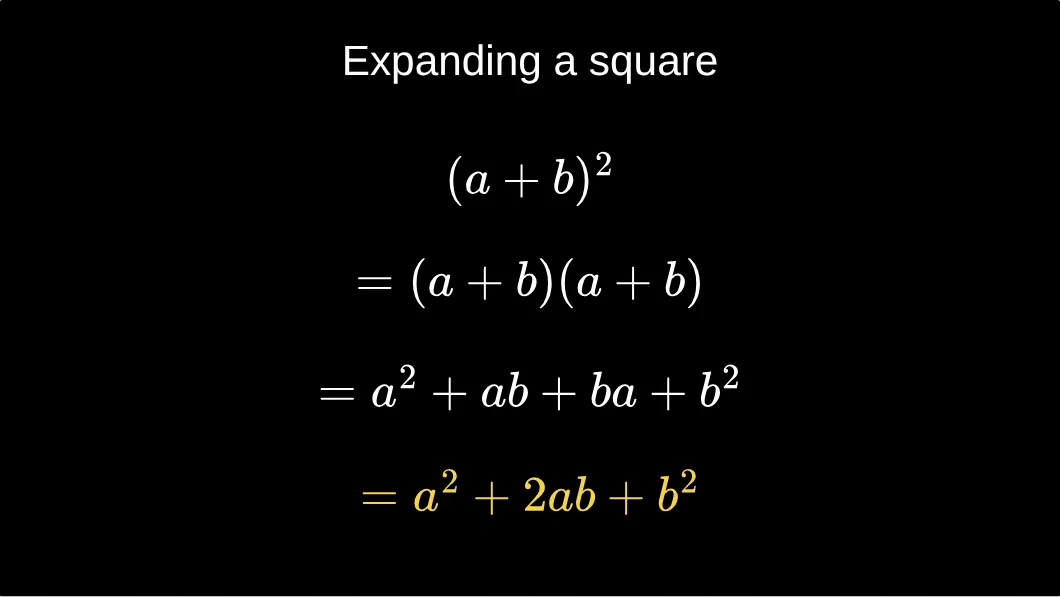
Write equations in LaTeX or like on a calculator. Highlight a term, then reveal the next line on a click, so the audience follows the argument.
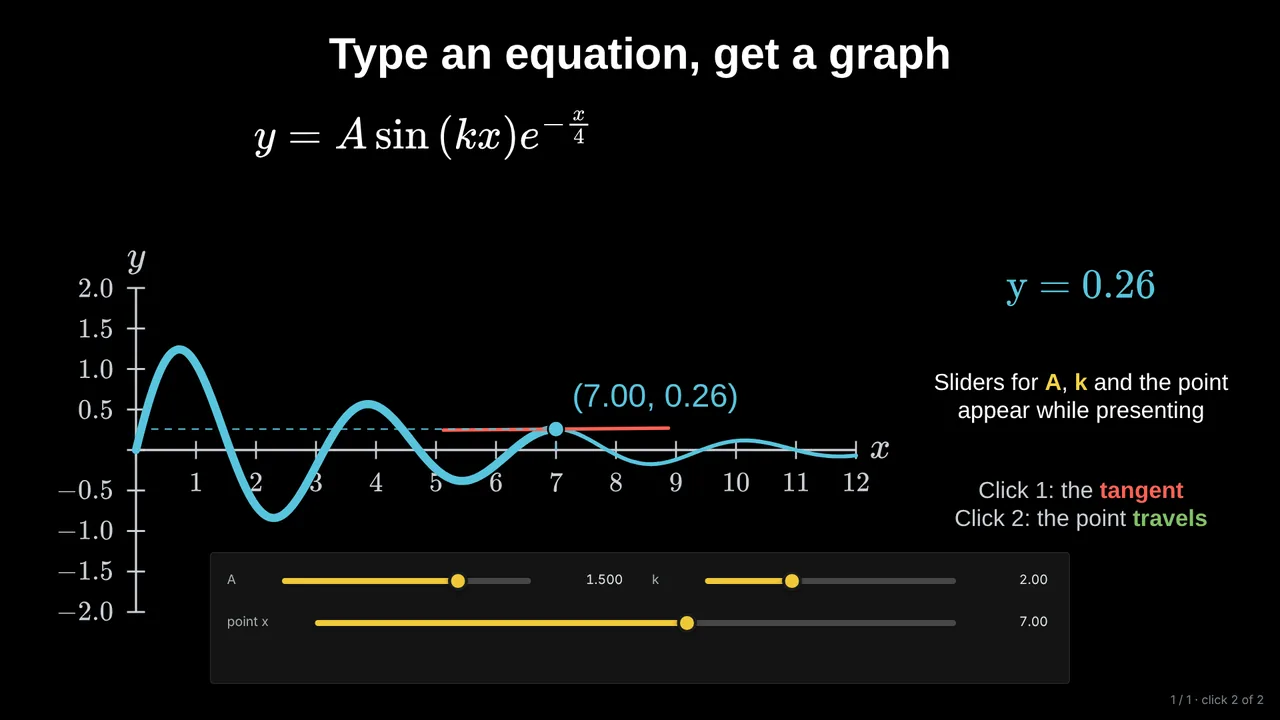
Give a parameter a slider and drag it during the talk or the questions. The curve, the field or the simulation follows, which a static figure cannot do.
a 10 to 20 minute talk from a paper you already wrote, with the key result animated instead of read aloud.
when the jury asks “what if this parameter doubles?”, drag the slider and answer with the model itself.
It reads the formulas in the PDF and writes them as editable equations. Check each one: you can fix any of them in LaTeX in a few seconds.
Yes. Any equation can be written in LaTeX, and Pro can also export a Python script for Manim if you want to render the animation yourself.
Yes. Export to PowerPoint keeps every slide and your notes; each slide is its final picture. To keep the animations and sliders, present from Tracé in the browser.
The editor is free. Building slides from a paper uses AI credits; a new account gets free credits to try it, and Pro costs $72 a year with 30 credits every month.
Start with an example deck or a blank slide. It takes a minute.