Topic
Lesson plan
17 articles on lesson plan: the maths or physics explained, ready-to-teach lesson plans, and how to build each slide in Tracé.
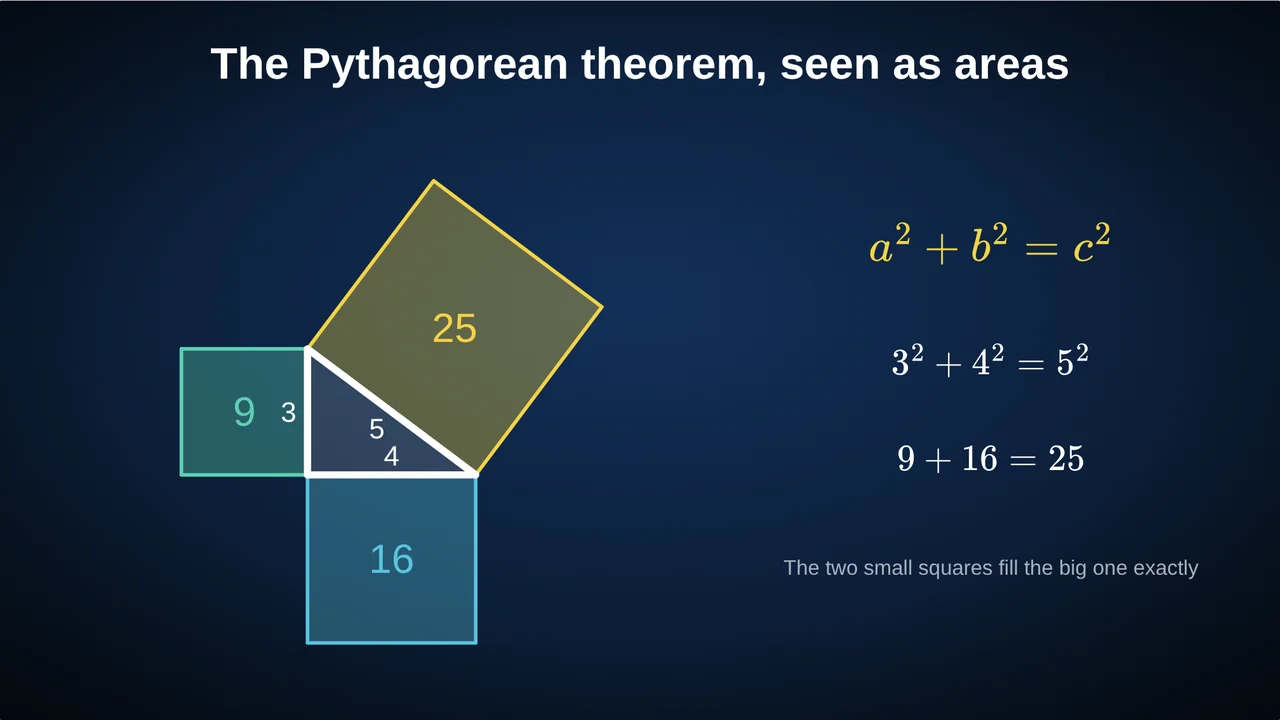 Pythagorean Theorem Lesson: A Visual Proof in 5 ClicksA ready-to-teach Pythagorean theorem lesson: the areas picture, a proof students can follow, common mistakes, check questions, and how to animate it.
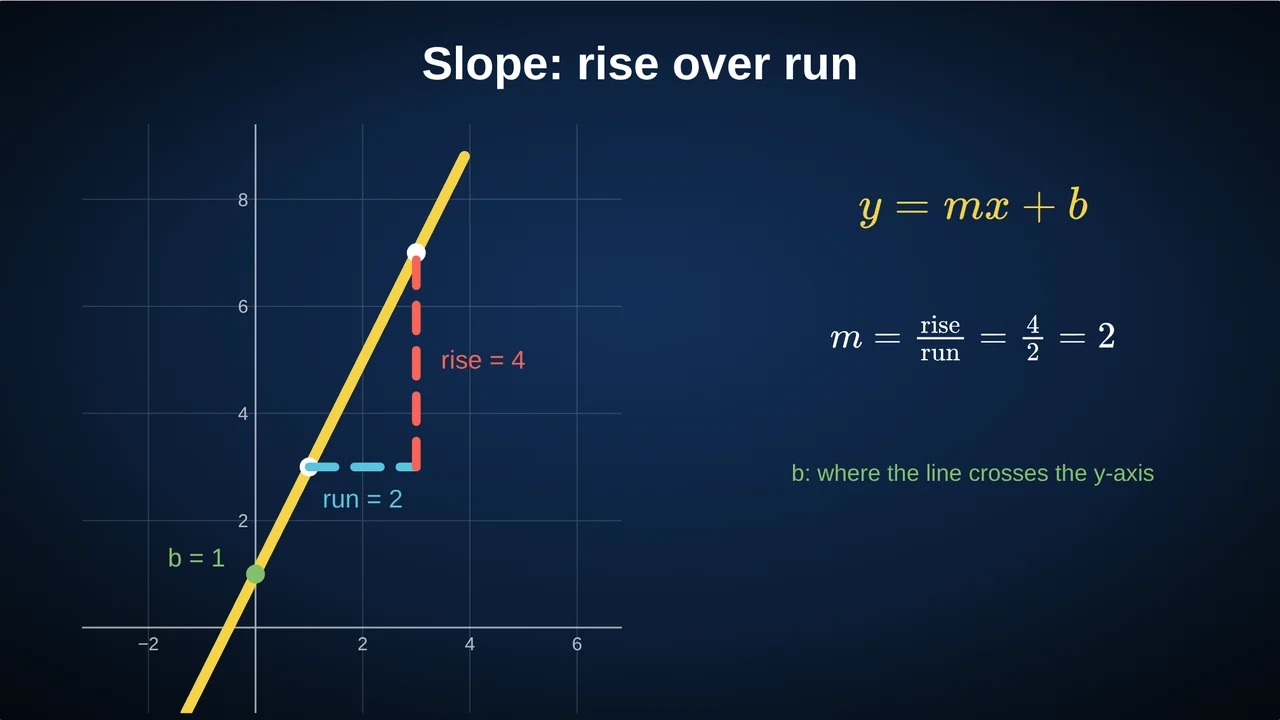 Teaching Slope and y = mx + b: An Animated Lesson PlanA slope lesson students can see: rise over run, what m and b do to a line, the usual mistakes, check questions, and live sliders for m and b.
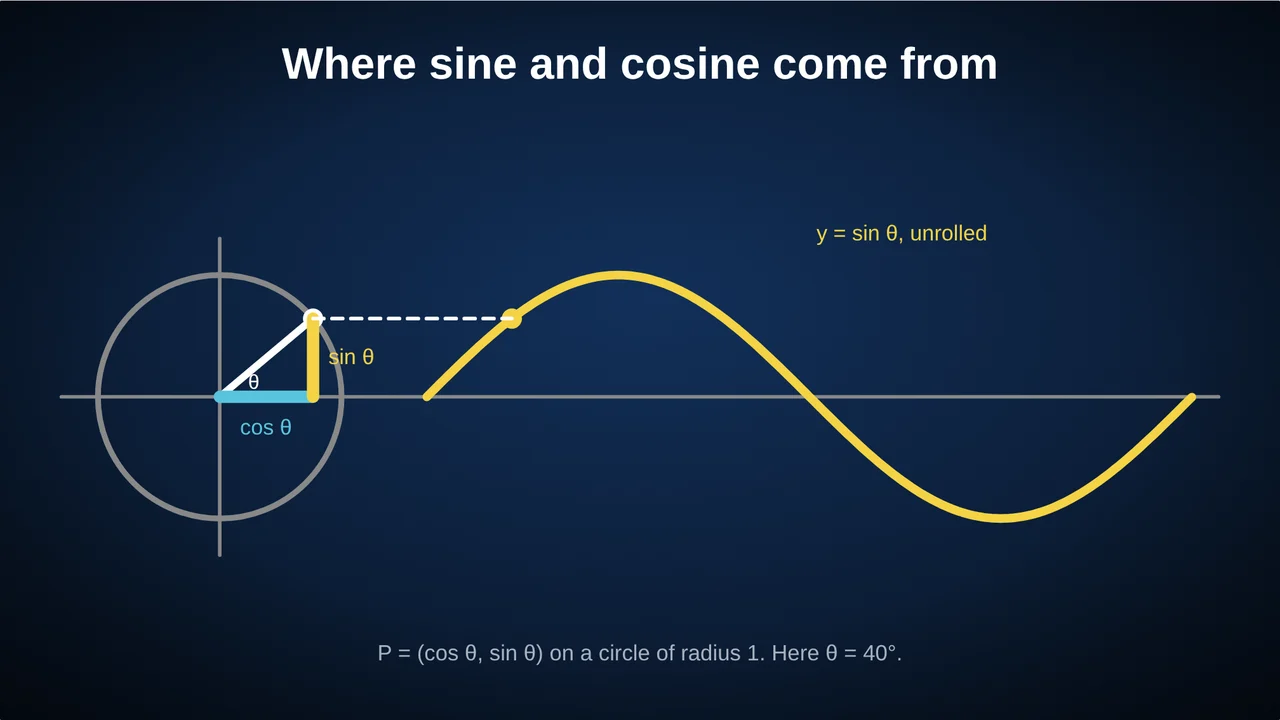 The Unit Circle Lesson: Where Sine and Cosine Come FromA unit circle lesson plan: sine and cosine as coordinates, special angles, signs in each quadrant, the sine wave unrolled, common mistakes and checks.
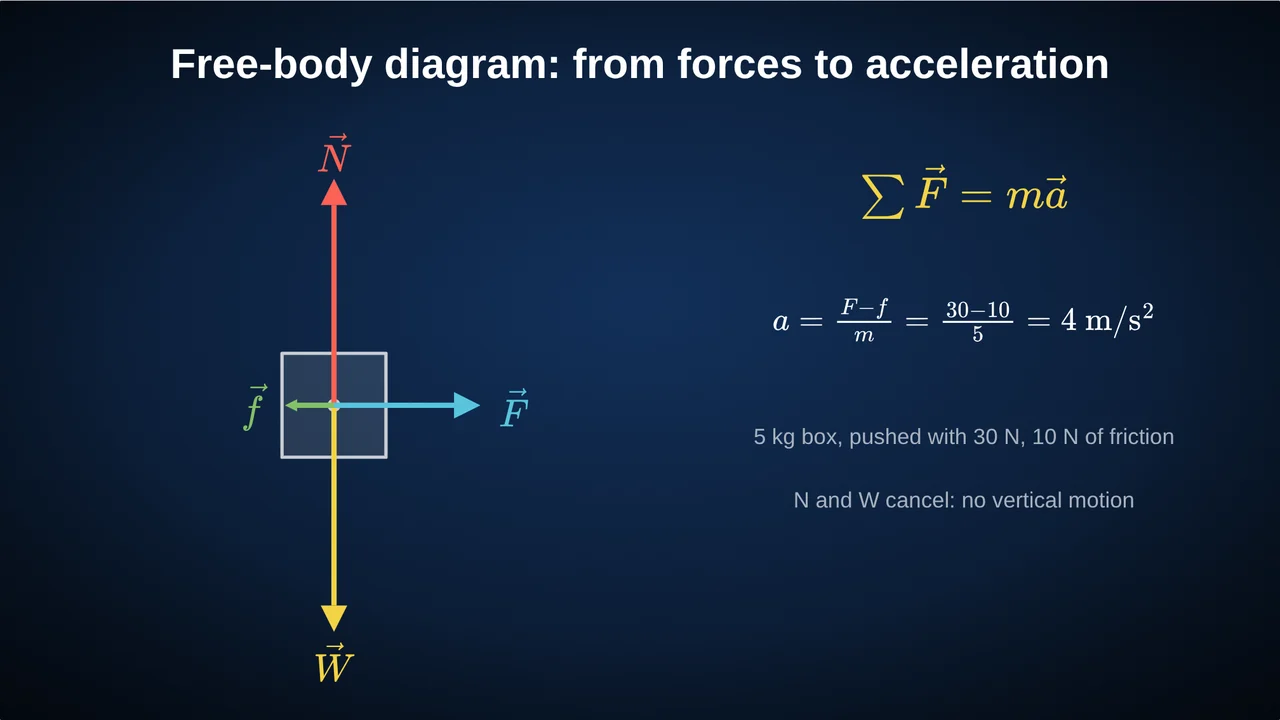 Free-Body Diagrams and Newton’s Second Law: A Lesson PlanHow to teach free-body diagrams step by step, a worked example (30 N push, 10 N friction, 5 kg: a = 4 m/s²), the classic mistakes and check questions.
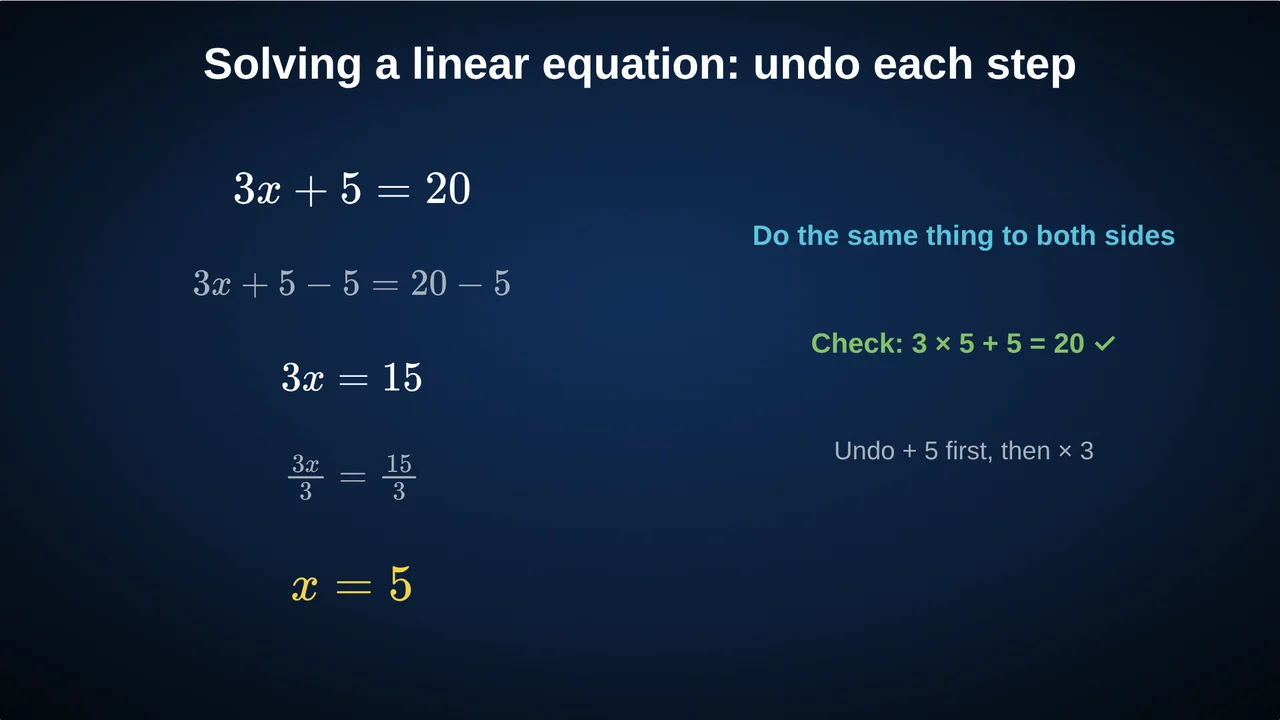 Solving Linear Equations: A Step-by-Step Lesson PlanTeach solving linear equations as undoing steps: a balance-based lesson, worked examples, the classic sign mistakes, check questions and animated steps.
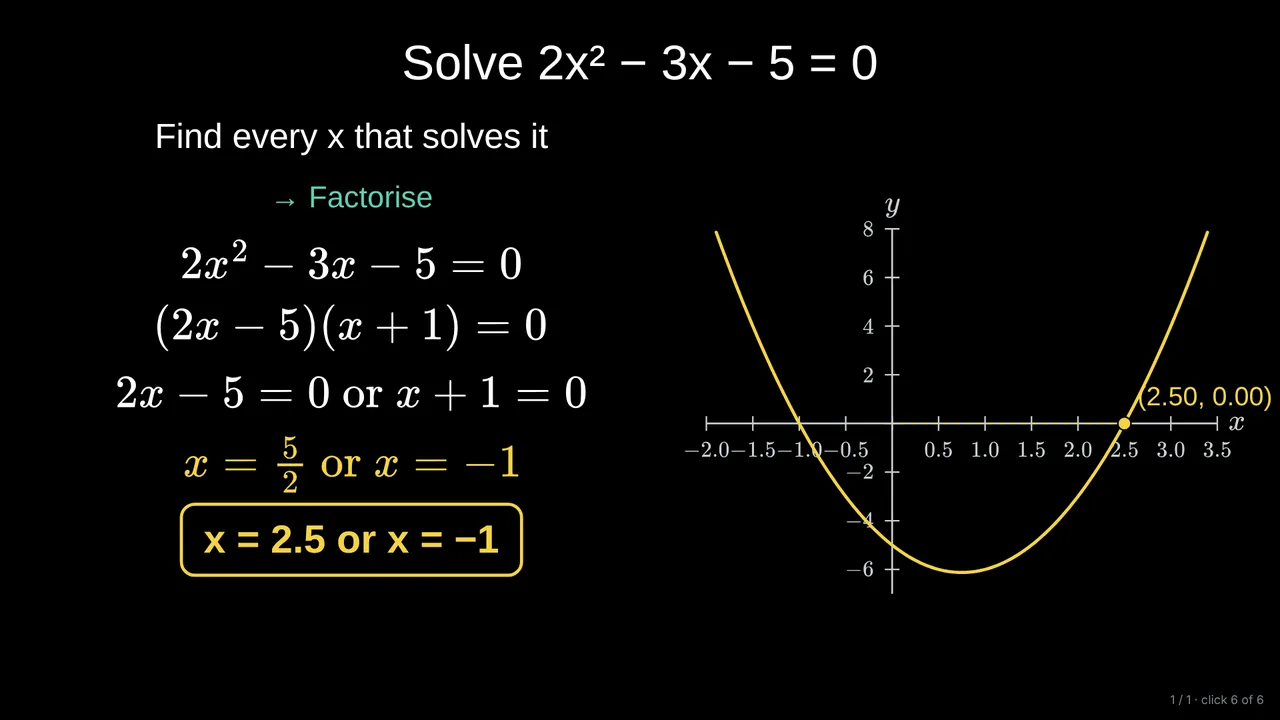 Solving Quadratic Equations by Factoring: Lesson PlanSolve quadratic equations by factoring: the zero-product rule, the product–sum method, a worked example, common mistakes and checks, with the graph alongside.
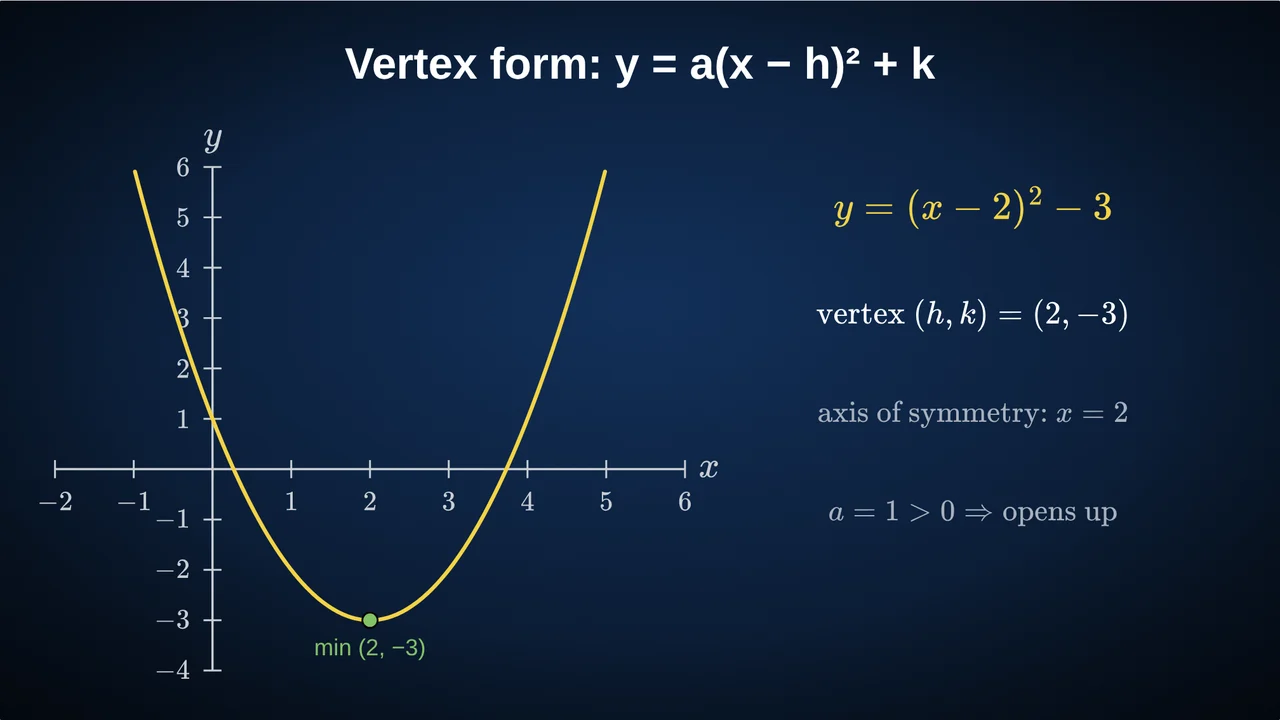 Graphing Quadratic Functions in Vertex Form: Lesson PlanTeach vertex form y = a(x − h)² + k: what a, h and k do to a parabola, completing the square, the sign trap with h, and live sliders to explore it.
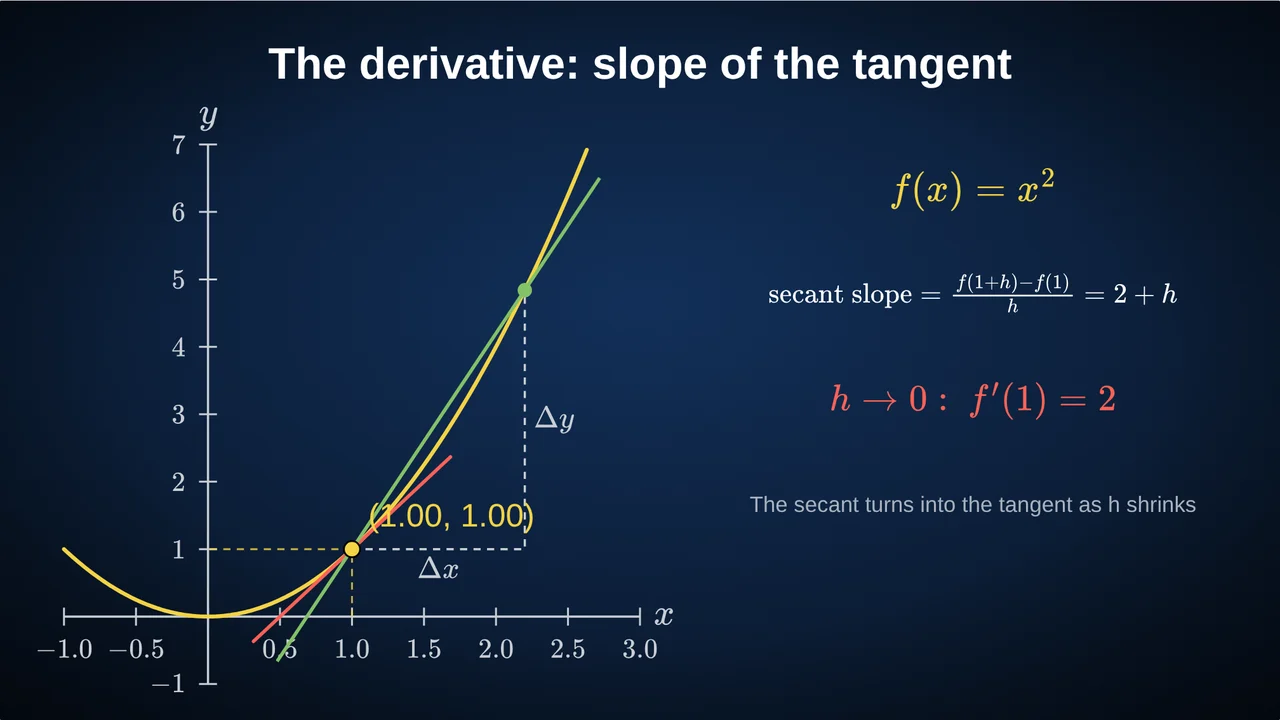 The Derivative as the Slope of a Tangent: Lesson PlanIntroduce the derivative as the slope of the tangent line: secants that shrink, the limit (f(x+h) − f(x))/h, a worked example with x², mistakes and checks.
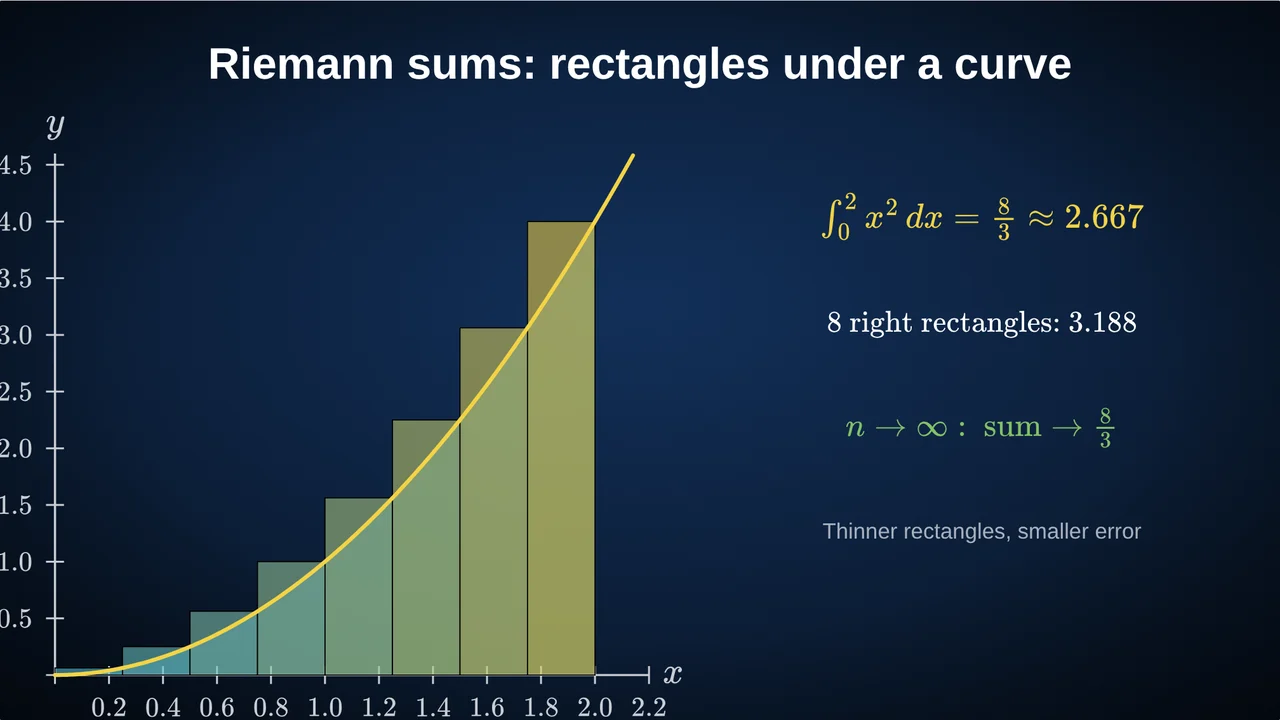 Riemann Sums: Teaching the Area Under a CurveA Riemann sums lesson: left, right and midpoint rectangles under y = x², exact numbers for 8 rectangles, how the error shrinks, mistakes and checks.
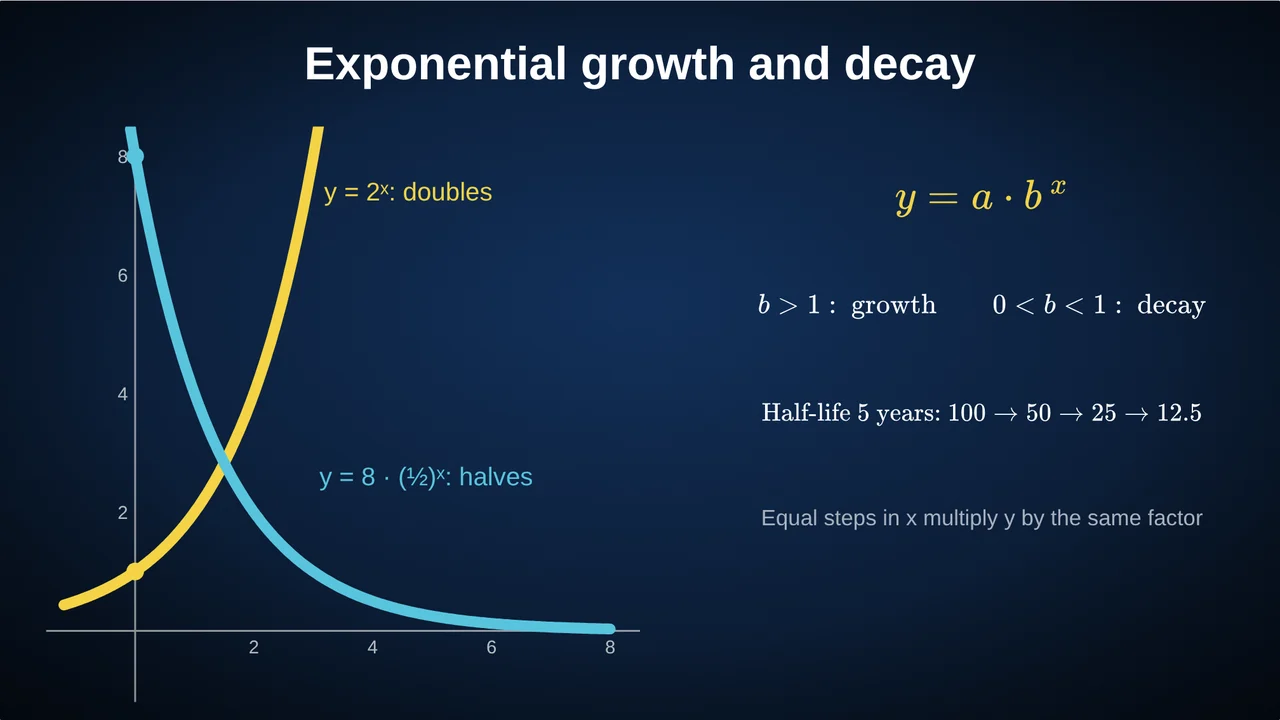 Exponential Growth and Decay: A Lesson PlanTeach exponential growth and decay with y = a·bˣ: doubling, half-life, compound interest, why exponential beats x², common mistakes and check questions.
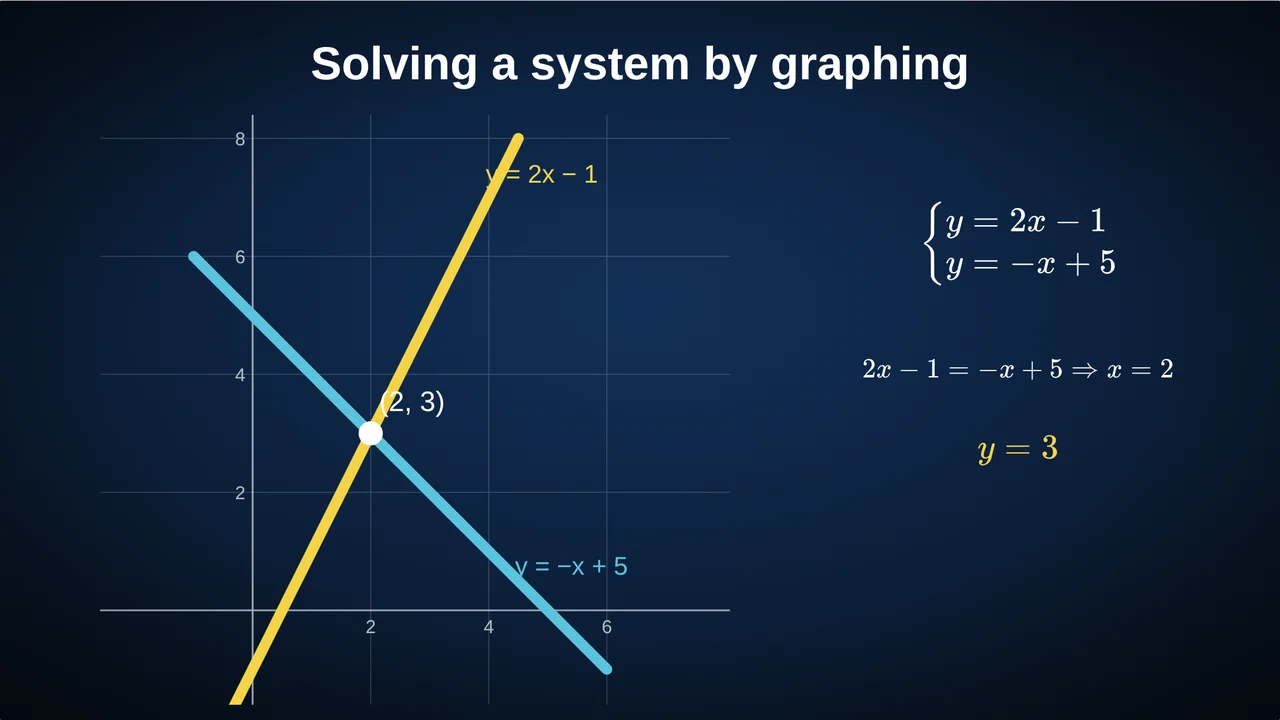 Solving Systems of Equations by Graphing: Lesson PlanTeach systems of linear equations by graphing: the intersection as the solution, one, none or infinitely many solutions, substitution as a check, and mistakes.
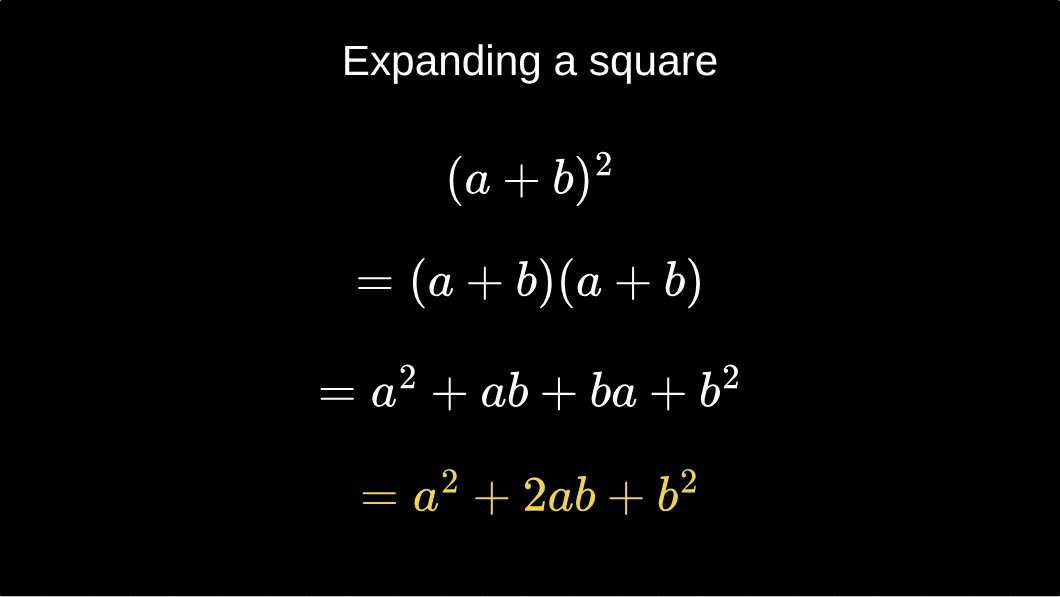 Expanding Brackets and (a + b)²: An Area Model LessonTeach expanding brackets with the area model: why (a + b)² = a² + 2ab + b², not a² + b², the difference of two squares, mistakes and check questions.
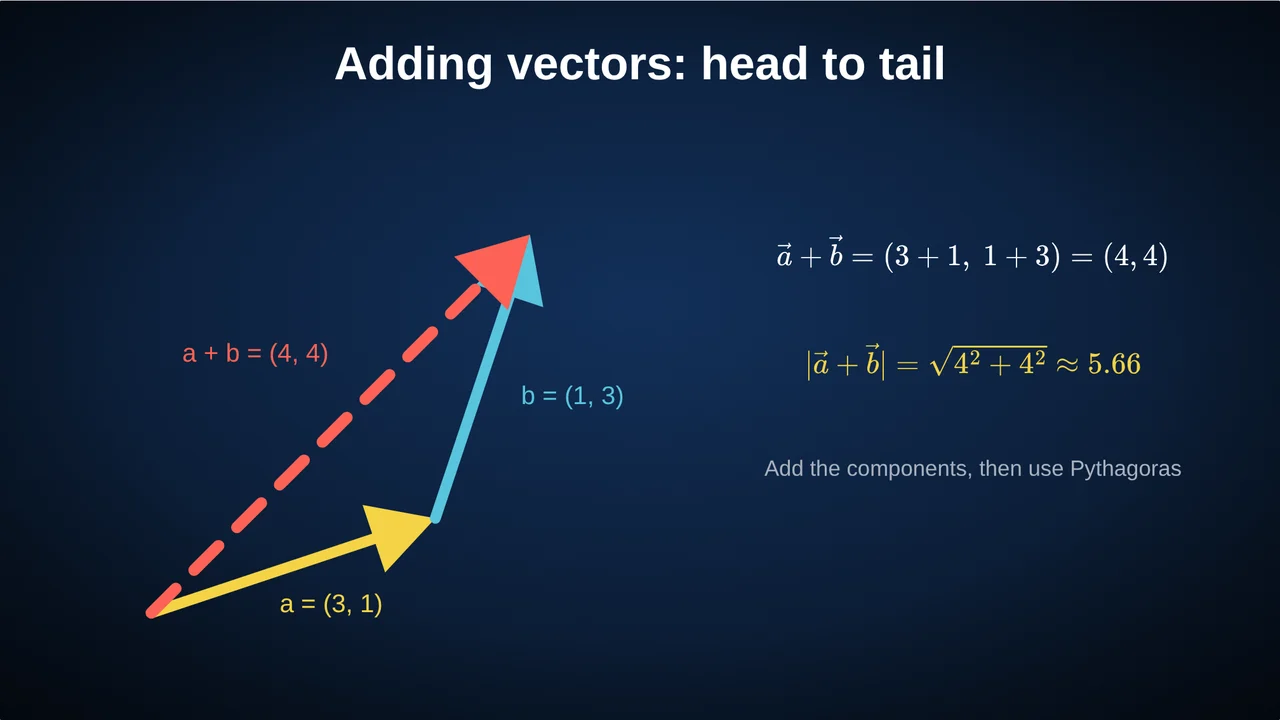 Adding Vectors Head to Tail: A Lesson PlanTeach vector addition: head-to-tail drawings, adding components, the magnitude with Pythagoras, a river-crossing example, common mistakes and checks.
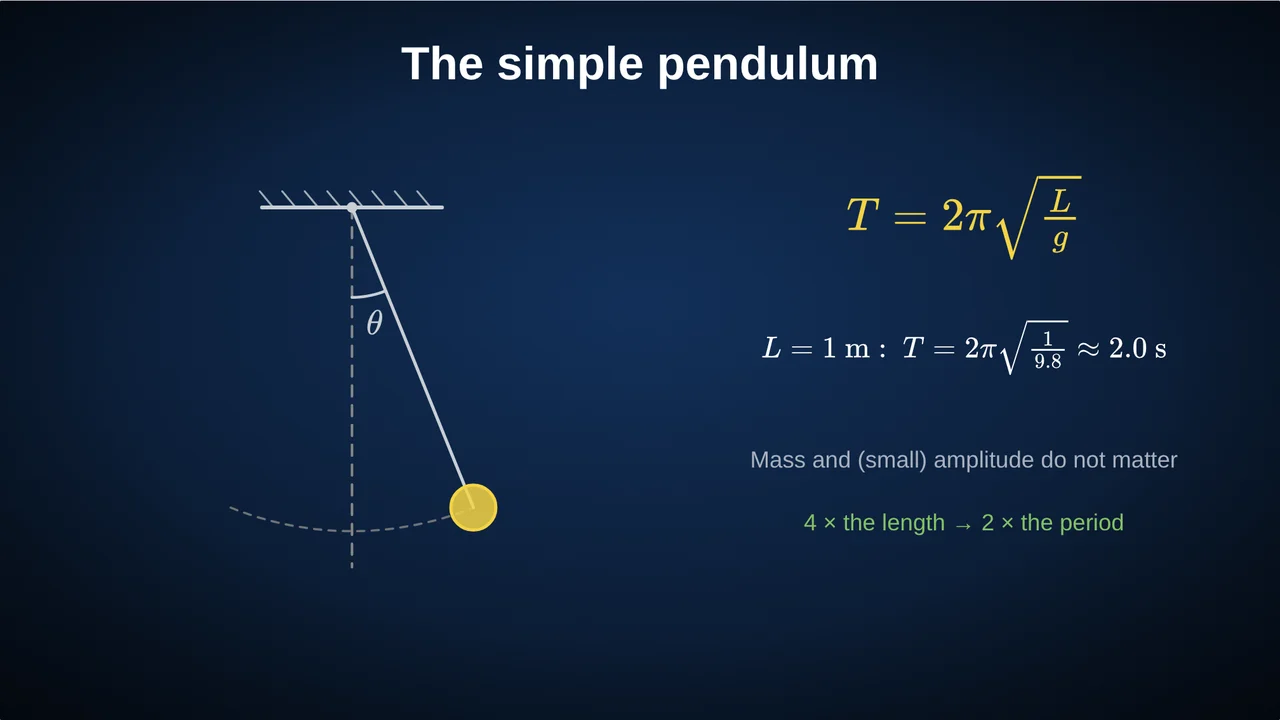 The Simple Pendulum Period: T = 2π√(L/g) Lesson PlanTeach the simple pendulum period formula T = 2π√(L/g): what changes the period and what does not, the small-angle limit, worked examples and checks.
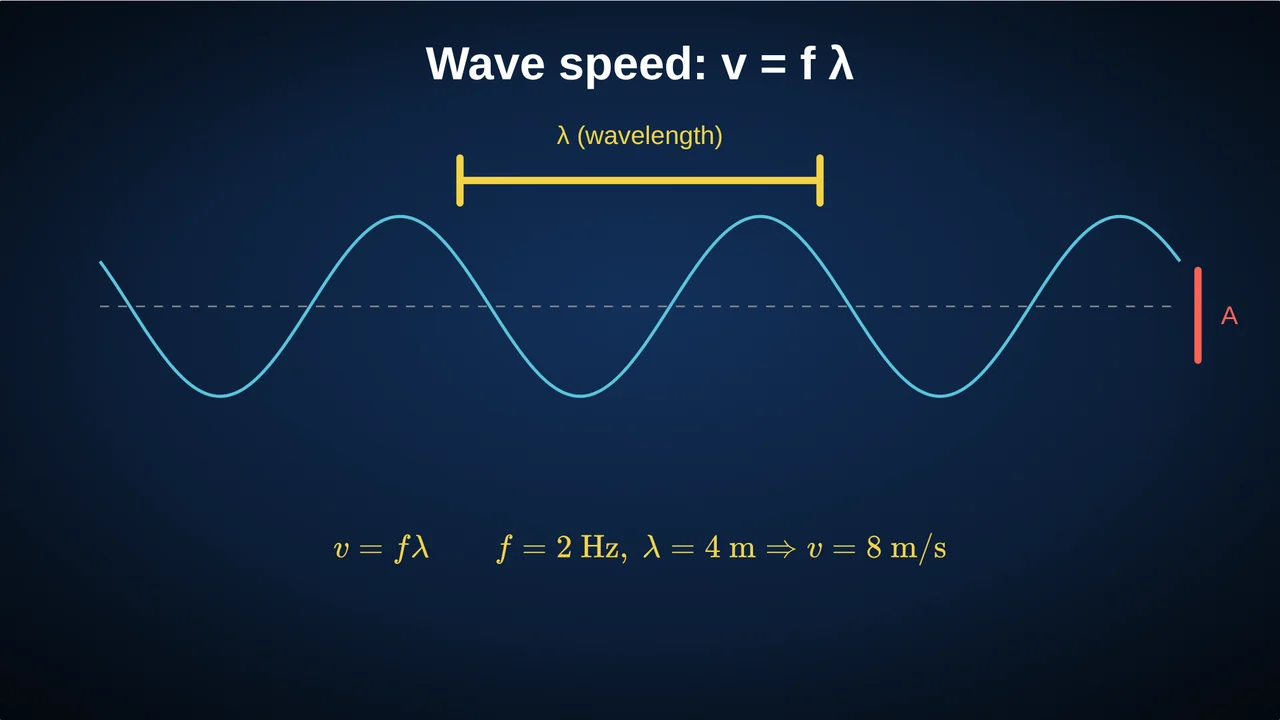 Wave Speed, Frequency and Wavelength: v = fλ LessonTeach the wave equation v = fλ: wavelength, frequency, period and amplitude on one animated wave, examples with sound and light, mistakes and checks.
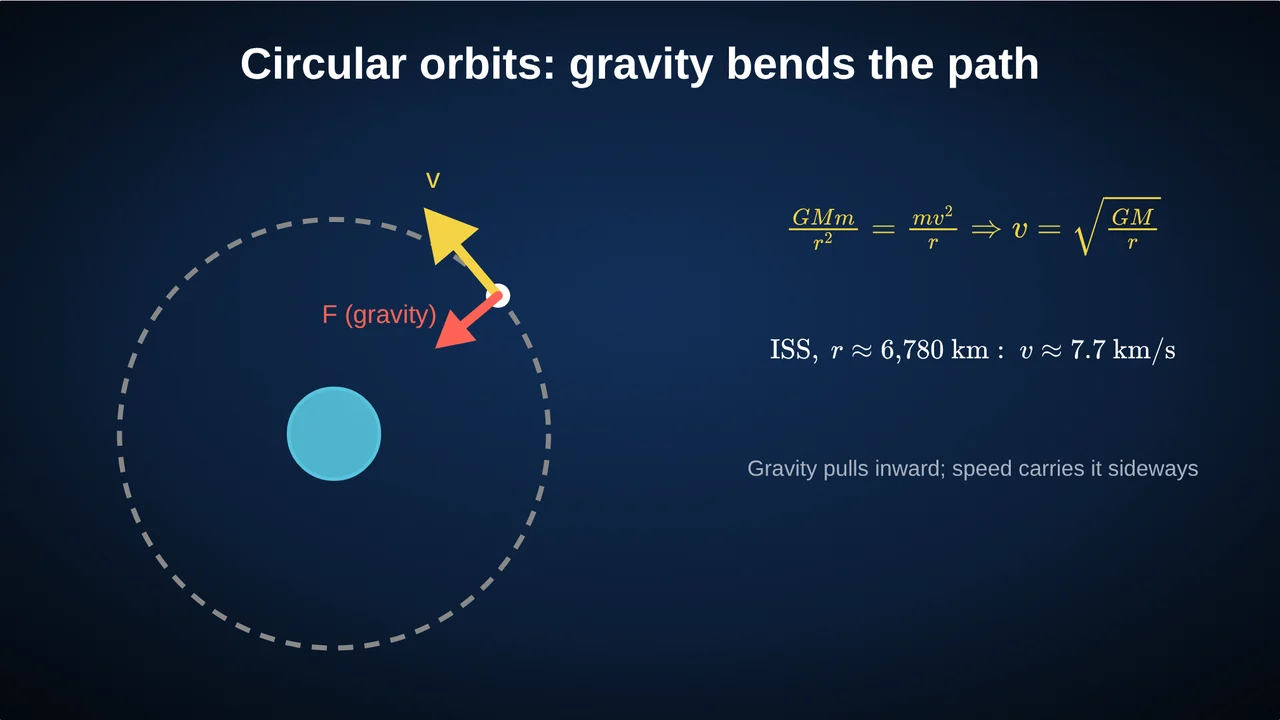 Circular Orbits and Gravity: Why Satellites Don’t FallA lesson on circular orbits: gravity as the centripetal force, orbital speed v = √(GM/r), the ISS at 7.7 km/s and 92 minutes, geostationary orbit, and mistakes.
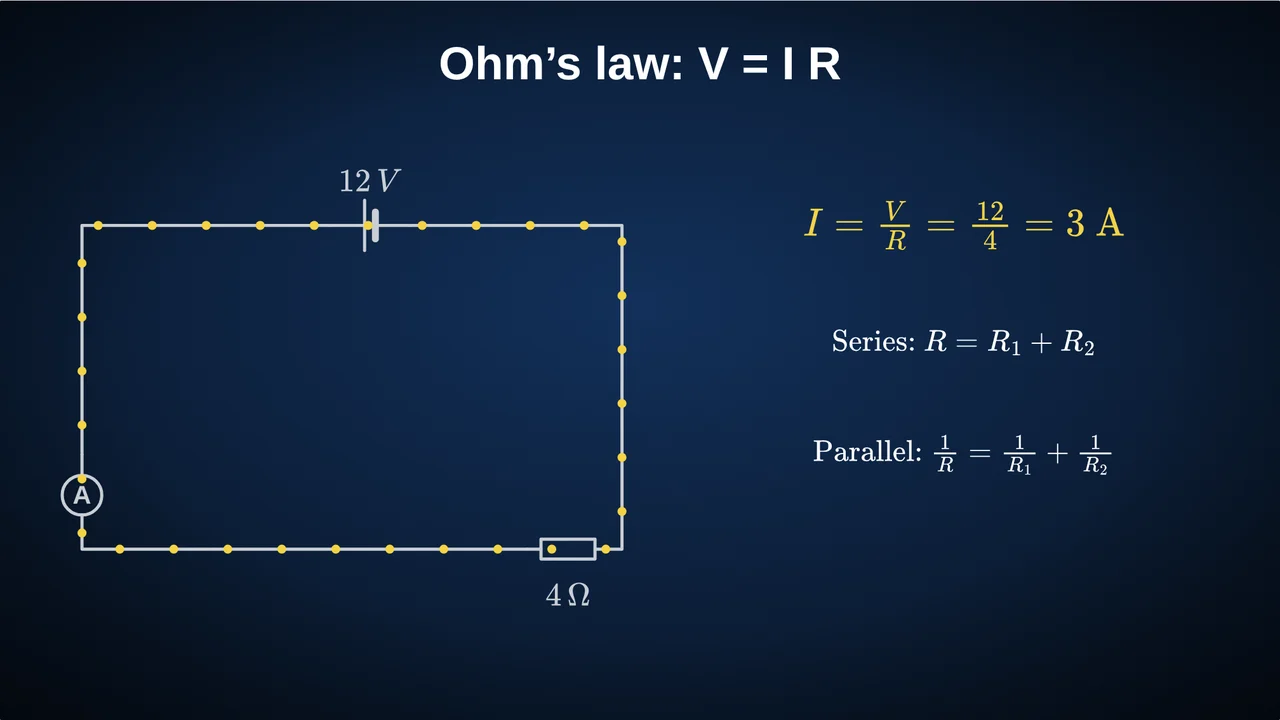 Ohm’s Law and Simple Circuits: A Lesson PlanTeach Ohm’s law V = IR with a live circuit: current, voltage, resistance, series and parallel resistors, power, the classic misconceptions and checks.